
FIREMARK BITE: Tiger Beer Flame Poster
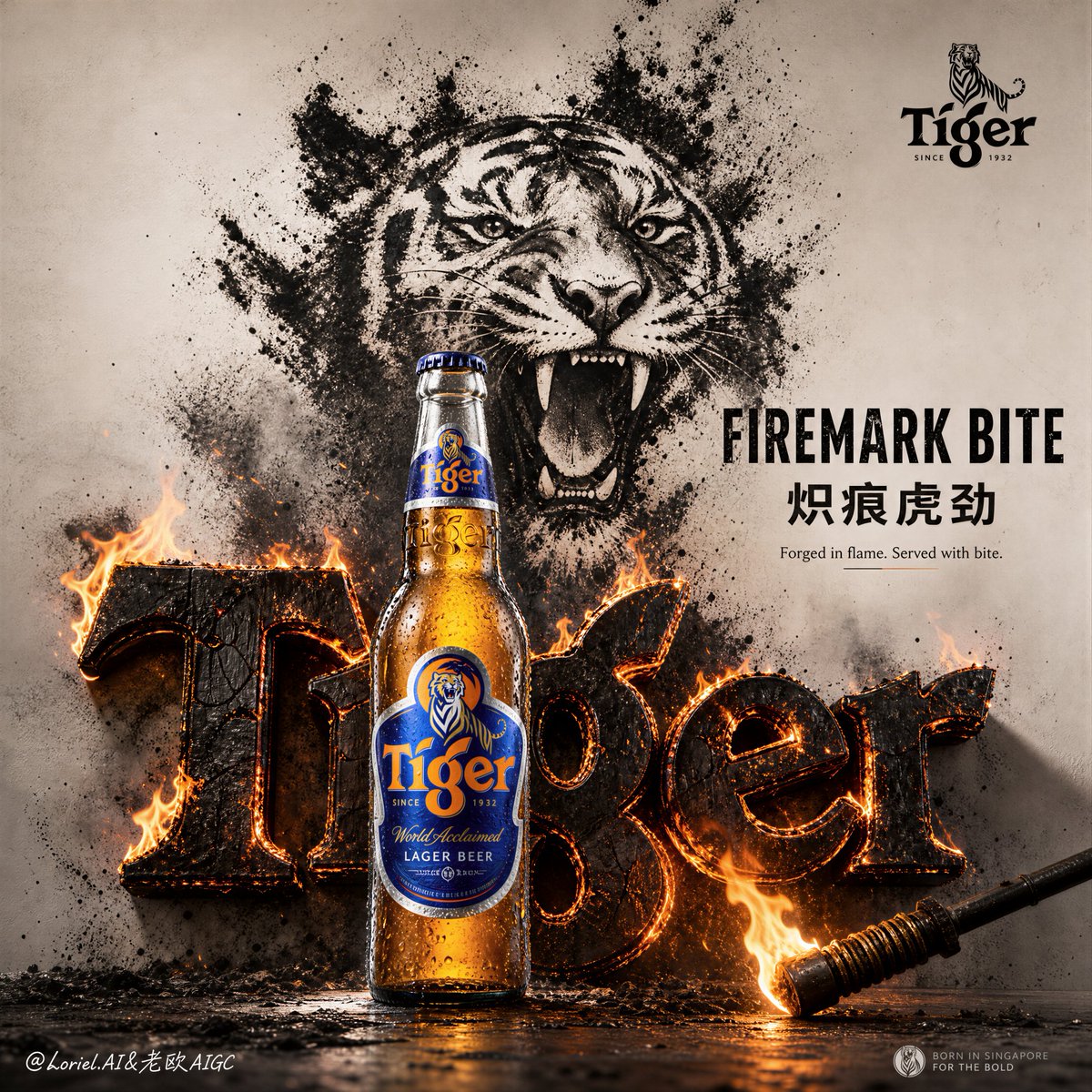
Fourth poster in the ultra-premium Tiger Beer campaign series, featuring a front-facing hero bottle with a brand-shaped fire structure behind it, black-ash flame atmosphere, and striking contrast between cold bottle and hot fire, conveying bite and heat.
Prompt
🔥The flame pattern brings the power to the forefront, and the contrast between the coolness of the bottle and the intensity of the background creates a sense of ferocity. GPT-image 2 prompt👇 Create the fourth poster in the same ultra-premium Tiger Beer campaign series, built on a locked central product composition with a clean minimal background, a front-facing hero bottle, a brand-shaped fire structure behind it, and a highly controlled black-ash flame atmosphere. The final image must feel visually shocking, real, precise, and cleverly designed, combining premium product photography with a crafted fire-symbol installation. The overall poster should feel like a world-class global beer campaign: bold, refined, fiery, tactile, and unmistakably Tiger Beer. Core concept: The poster is built around one front-facing Tiger Beer bottle standing as the absolute hero object at the center of the composition. Behind the bottle, construct a large brand-linked sculptural fire installation that fuses the Tiger identity with burnt material, black ash, ember glow, and controlled live flame. The visual logic must feel elegant and clever rather than chaotic: the bottle is the focus, while the fire system behind it becomes a symbolic stage for the brand’s wild energy. The image should communicate bite, heat, night energy, and premium street-fire intensity. Composition structure: Use a wide vertical-or-horizontal premium poster composition with a mostly clean pale background, allowing the central structure to dominate. Place the Tiger Beer bottle in a strict front-facing hero angle near the center-left or center-middle. Behind it, build a large crafted brand structure consisting of the Tiger name or brand-linked sculptural forms rendered as charred metal, burnt stone, or fire-scorched industrial lettering, partially wrapped with live flame tongues and ember edges. Above or behind this structure, integrate a black ash-style tiger emblem or roaring tiger silhouette formed from soot, burnt powder, and explosive charcoal dust, emerging like a spirit mark from the wall. In the lower-right area, include a fire source object such as a burning torch, heated branding rod, or ignition tool entering the scene to imply the moment of activation. The whole composition must feel balanced, premium, and deliberately art-directed. Hero product: Render the Tiger Beer bottle with absolute realism and luxury beverage fidelity. The bottle must be perfectly front-facing, never turned away, with full label readability: tiger emblem, blue-and-gold label hierarchy, amber glass body, chilled condensation, subtle frost mist, tiny droplets, glass reflections, cap detailing, and physically accurate bottle proportions. The bottle must feel cold, freshly opened or freshly chilled, intensely desirable, and visually dominant. The warmth of the flames must contrast beautifully with the cold premium bottle surface. The product must remain the cleanest and most controlled object in the frame. Fire brand structure: Behind the bottle, create a premium sculptural brand installation that looks physically built and then partially ignited. The letters or emblematic structural forms should feel heavy, tactile, charred, and real, made of blackened steel, burnt iron, carbonized stone, or scorched textured material. Along selected edges, let realistic flames burn with precision: orange cores, yellow heat, red ember fringes, and glowing molten cracks. The fire must not feel random. It should feel strategically placed to enhance the form of the brand structure and reinforce Tiger Beer’s bold identity. The flames should wrap, lick, and travel across the edges in a way that feels cinematic and believable. Tiger spirit mark: Above or behind the product structure, integrate a roaring tiger symbol formed from black soot, charcoal dust, ash bursts, and scorched particulate matter. This tiger mark should feel fierce, graphic, and ephemeral, like it has been blasted onto the wall by heat and combustion. It must be visually connected to the Tiger brand, but still feel artistic and atmospheric. The mark should add aggression and icon energy without overpowering the bottle. Background and space: Keep the background clean, minimal, and premium, using a pale cement, mineral plaster, or warm off-white wall surface with subtle texture. This negative space is essential for making the product, fire, ash, and logo structure feel controlled and high-end. Add only restrained surface texture, faint powder fallout, soot scatter, and minimal wall staining around the central installation. Do not clutter the scene with unnecessary objects. Fire and ash effects: Use highly refined realistic fire effects: sharp-edged flame tongues, ember glow, soft heat halos, tiny ash particles, charcoal dust scatter, faint smoke drift, black powder residue, and delicate burnt debris. Add a thin layer of soot fallout around the lettering and beneath the fire source object. Let the flames feel alive and dynamic, but always premium and controlled. The image should feel hot, tactile, and dangerous in an elegant commercial way. Lighting: Use extremely delicate high-end cinematic lighting. The bottle should receive premium product light with crisp specular highlights on the glass, rich amber liquid glow, and controlled label readability. The flame structure should cast warm orange reflections and soft shadow play onto the wall and the bottle edges. The overall lighting must balance cold product polish with warm combustion drama. Shadows should be clean, directional, and elegant, with a slight long-shadow effect if it supports the composition. Color direction: Use a premium fire-and-ash palette of amber glass gold, deep black, charcoal gray, soot brown, ember orange, flame yellow, muted cream wall tones, and Tiger Beer’s signature blue-gold branding. The bottle must remain the richest focal object, while the background stays pale and minimal. The contrast between cool product polish and hot blackened fire elements is essential. Typography: Use an elegant overseas-product typography system with an English main title and a refined Chinese subtitle, integrated minimally in the composition with luxury restraint. Main English title: “FIREMARK BITE” Chinese subtitle: “炽痕虎劲” Supporting English copy can be minimal and refined, such as: “Forged in flame. Served with bite.” Add only a subtle official-style logo mark and restrained micro-copy. Typography must feel premium, clean, and beautifully spaced, never heavy or crude. Mood: bold, fiery, premium, graphic, tactile, cinematic, controlled, aggressive, refined, real, globally premium, iconic, heat-charged Rendering style: ultra-premium Tiger Beer commercial poster, front-facing hero bottle, clean minimal background, charred brand structure, roaring tiger ash mark, realistic live flame edges, black soot and ember atmosphere, premium glass reflections, hyper-real beverage detail, elegant typography, world-class advertising key visual, 8k, global campaign quality Negative prompt: back-facing bottle, side-hidden label, weak product dominance, cluttered layout, cheap beer ad, fake flames, cartoon fire, muddy ash texture, ugly typography, low-detail glass, messy background, low-end poster design, chaotic composition, weak brand structure logic
Kynvio Prompt Workflow
How to use this prompt
Open it in Image Studio
Send the prompt to Kynvio AI without starting a generation.
Adapt the details
Replace the subject, setting, colors, text, or composition for your goal.
Review and generate
Choose your final settings, then click Generate when you are ready.
Related GPT Image 2 prompts
GPT Image 2 prompts
About this prompt
Will opening this prompt spend credits?
No. The button only prefills Image Studio. Credits are used only after you start a generation.
Can I edit the prompt first?
Yes. The transferred text is fully editable before you generate an image.