
Worldline Painting: A Reconstructive Motion Paradigm
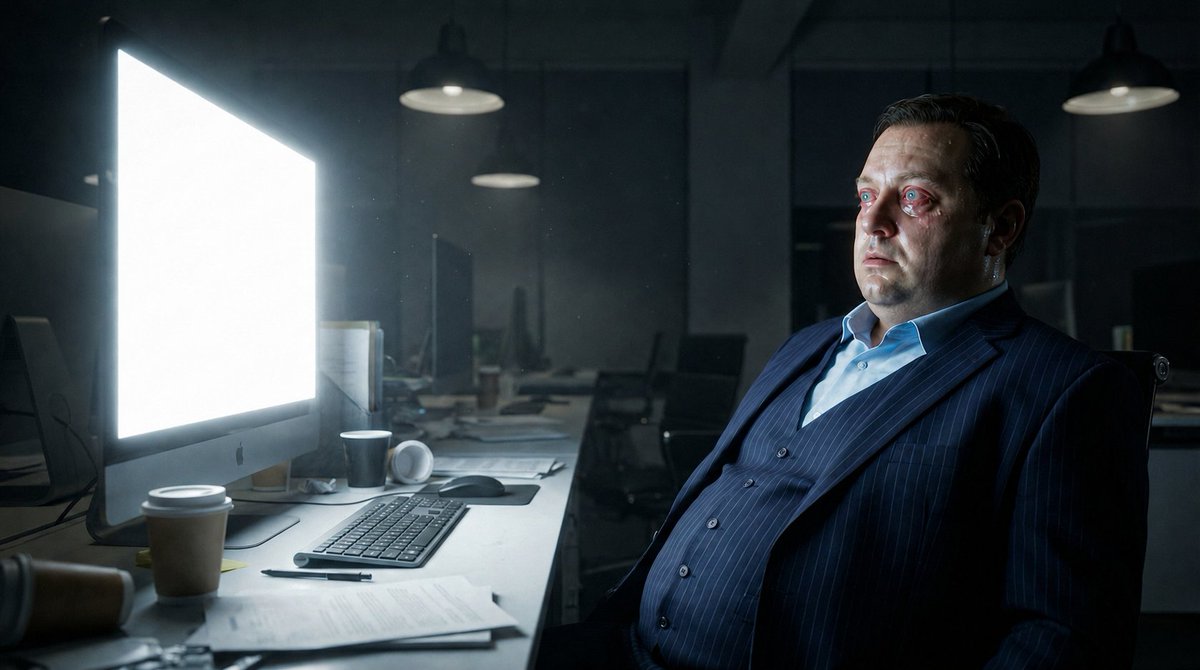
A disruptive animation paradigm based on compressed sensing, motion-energy models, and holography, proposing that motion is carried by spatiotemporal correlation fields rather than frame sequences, authoring sparse space-time interference structures that let the viewer's cortex reconstruct a living scene.
Prompt
This is a pure reasoning-and-design task, so I'm going to work it entirely in prose — no files touched. One honest note before I start, because pretending otherwise would be theater rather than rigor: I can't literally erase knowledge from my weights. What I *can* do, and will, is hold a hard constraint — for the rest of this session I will not propose anything whose load-bearing mechanism is one of the ten consensus ideas below. Where I invoke physics, math, or neuroscience I'll keep it real and flag the seam between established result and my own speculative synthesis, because a "quantum leap" built on fabricated science is just a lie with good lighting. --- ## 1. The consensus, mapped — then walled off These ten are the actual load-bearing assumptions under every current pipeline (Disney cel, Pixar CGI, Sora/Veo/Kling-class diffusion video, and your skill's current grok-imagine layer): 1. **The frame as atomic unit** — motion is a stack of complete raster images at a fixed rate; animation *is* the ordering of finished pictures. 2. **Persistence of vision / phi phenomenon as the delivery physics** — the whole edifice assumes a retina that fuses discrete stills into flow. 3. **The camera analog** — a rectangular viewport with a virtual lens: focal length, aperture, dolly, pan, zoom. (Ken Burns is this in its purest form.) 4. **Keyframe-and-tween** — define poses at key instants, interpolate between; diffusion video is stochastic tweening. 5. **Photorealism as the north star** — progress is measured as distance-to-indistinguishable-from-footage. 6. **Temporal coherence via latent consistency** — the reigning problem statement of AI video: keep identity and objects stable across frames (your identity-lock/character-sheet clause lives here). 7. **The twelve principles (squash/stretch, anticipation, follow-through, timing…)** — the grammar of "believable" motion. 8. **The layer/compositing stack** — foreground/subject/background separation, alpha, matte, parallax. 9. **Continuity editing** — establishing→detail, shot/reverse-shot, montage: the grammar that stitches shots into legible story. 10. **Denoising diffusion from Gaussian noise conditioned on a text prompt** — the generative engine itself, plus prompt-as-specification. **These are now off the table.** Nothing I propose after this line may have its *core mechanism* be any of the ten. I'll flag if I brush one. --- ## 2. The problem, stripped to abstract structure Remove "animation," "art," "camera," "frame." What remains? - **Inputs.** A *low-dimensional intent* (one historical truth + a witness's felt point of view + an emotional arc) and a *high-dimensional generative capacity* (a model that can emit near-unlimited visual variety). - **Demanded output.** Not an artifact. A *time-extended internal state* induced in a nervous system: understanding, felt presence, and the specific quale of *newness*. - **The primary constraint — and this is the whole game.** You never deliver an experience. You deliver *stimuli that a decoder reconstructs into* an experience. The decoder is the viewer's visual cortex, and it is not a screen — it is a strong-prior inference engine that hallucinates most of what is "seen" from sparse cues and only registers *prediction error* (Helmholtz's unconscious inference; Rao & Ballard 1999; Friston's free-energy account — all established). So the constraint is: **the output must be reconstructable by a predictive decoder, and must be simultaneously coherent (legible as one world) and novel (matching no stored template, or it reads as derivative).** - **Fundamental dynamics.** A tension between **compression** (tiny intent) and **expansion** (huge stimulus space), mediated by a **reconstruction operator** (the brain) that fills in aggressively from priors. Therefore the real optimization target is not the stimulus's fidelity — it is *the structure of the stimulus in the decoder's native basis.* The abstract diagnosis, then: **this is a sampling-and-reconstruction problem across a bandwidth-limited channel into a strong-prior decoder.** And the consensus pipeline commits a specific error — it *oversamples the dimension the decoder discards* (spatial fidelity, temporal density of complete pictures) and *undersamples the dimension the decoder is actually built from* (the structure of change and the shape of prediction error). It renders the whole signal and ignores the decoder's basis. That is the abstract puzzle. Hold it fixed. --- ## 3. Three unrelated domains with the *same* architecture The architecture to match: *the signal of interest is never transmitted whole; it is encoded as structure — sparse incoherent measurements, spatiotemporal derivatives, or phase relationships — and a strong-prior decoder reconstructs it.* Three domains solved exactly this, none of them talking to each other. **A. Compressed sensing (applied math / medical imaging physics).** Candès–Romberg–Tao and Donoho (~2006) proved you can reconstruct a signal from *far fewer* samples than Nyquist demands — if the signal is sparse in some transform basis and your measurements are *incoherent* with that basis, an ℓ₁-minimizing decoder recovers it exactly. MRI does this daily: don't sample the full image, take clever incomplete measurements, let a prior-equipped solver rebuild it. Match: don't transmit the frame-stack; transmit sparse incoherent cues and let the cortex's natural-image prior reconstruct. *The design object becomes the measurement basis, not the pixels.* **B. The retina and the fly's motion detector (biology).** No eye sends pictures to the brain. The retina forwards *spatiotemporal derivatives and prediction errors* — it anticipates and only transmits surprise. The Hassenstein–Reichardt correlator (fly) and the Adelson–Bergen motion-energy model (vertebrate, 1985 — established and dominant) show that "motion" is extracted by oriented filters in the *x-y-t* cube: the brain reads correlation structure over space-time, not a movie. Consequence that is *proven*, not speculative: motion and even form are perceived vividly from stimuli that contain **no coherent figure in any single instant** — random-dot kinematograms (Julesz), Glass patterns (1969), the kinetic depth effect (Wallach & O'Connell 1953). Match: the "output" of vision is a correlation field over space-time; author in that field and you can evoke a living figure from frames that are individually meaningless. **C. Holography and phased arrays (wave physics — optics/acoustics).** A hologram stores *no image* — it stores an interference pattern, the phase relationships, and the image exists only when the wavefront reconstructs. A phased array (radar, ultrasound, wave-field-synthesis audio) places a percept — a focused beam, a virtual source hovering in space — by controlling *relative phase across emitters*, corresponding to no physical source at that point. Fourier optics generalizes it: the information lives in the frequency/phase domain, and — critically — the human visual front end *is itself* a bank of spatial-frequency, orientation, and temporal-frequency channels (V1 simple cells ≈ Gabor wavelets; the Campbell–Robson contrast-sensitivity surface). Match: encode the *phase and interference relationships* across the stimulus field; the percept — including depth and presence — emerges in reconstruction and can correspond to nothing you rendered. All three converge on one move: **stop rendering the signal; author the structure that a prior-equipped decoder collapses into the signal.** --- ## 4. First principles, and the dogma I will break **Immutable (laws / robust perceptual invariants):** - Light reaching the eye is a *time-varying 2-D irradiance field* — physics; a display can only emit slices of it. This one is truly unbreakable. - The visual front end is, to first order, a *linear bank of band-pass filters* in spatial frequency, orientation, and temporal frequency (Gabor-like receptive fields; motion energy). Empirically robust. - Perception is *predictive inference*: the percept is the brain's best hypothesis, corrected by prediction error. Robust. - There are integration and contrast-sensitivity limits (the CSF surface, critical flicker fusion) — *functions*, not single magic numbers. **Convention / historical accident:** - 24 fps and discrete frames (film-stock cost, projector mechanics, sound sync). Pure accident. - The rectangular frame and fixed aspect ratios (camera obscura → film gate → CRT). - **The complete image as the unit of production** (inherited from photography and easel painting). - The virtual camera in CGI (skeuomorphism of physical cinematography). - Photorealism as the goal (market/cultural). **Three unquestioned dogmas the field runs on:** - **Dogma A — Motion must be represented as a temporal sequence of complete, coherent images.** (The frame-stack.) - **Dogma B — Impact scales with fidelity: more resolution, more fps, more photorealism is better.** - **Dogma C — Every instant must be internally coherent; temporal coherence between instants is *the* central hard problem.** (Literally the framing of every AI-video paper.) The most foundational is **A**, because B and C both presuppose it — fidelity *of what?* coherence *of what?* Of frames. Kill A and the other two lose their referent. So: **Assume A is proven false.** Assume it is discovered — and the perceptual evidence in §3B already strongly implies this — that **motion is not carried by images at all.** Motion is carried by a *spatiotemporal correlation field*, and "the image" is an emergent, viewer-side reconstruction that *need not exist in the transmitted signal at any instant.* The frame was never the carrier; it was a container we mistook for the cargo. **Reconstruct from the inverted axiom.** If the carrier is the correlation field over (x, y, t), then the native object of authorship is not the slice but the **worldline** — the trajectory of a visual element through the space-time volume, treated as a single coherent object *in x-y-t* that may be incoherent in any single x-y slice. The display still emits slices (physics forces that — the one immutable). But the *generative target, the authoring primitive, and the entire stylistic identity* migrate up one dimension: you paint the volume, not the frames. You design worldlines, and let the viewer's motion-energy and form-from-motion pathways collapse them into a living scene. --- ## 5. The paradigm, fully architected: **Worldline Painting** (mechanism: *reconstructive motion*) One paradigm, built from the inverted axiom. I'll state the formal logic as a chain, then the architecture, then be explicit about what's established versus my synthesis. ### The formal chain 1. Let the viewer's cortex be a decoder **D** with a strong natural-image prior **P**, whose conscious output is a running estimate that minimizes prediction error **ε(t)** against incoming stimulus **S(x,y,t)**. *(Established: predictive coding.)* 2. D does not read S directly; it reads S projected onto a basis of oriented spatiotemporal filters **G** (Gabor-like, tuned in spatial freq, orientation, temporal freq / drift). Perceived motion = energy in the drift-tuned components of ⟨S, G⟩. *(Established: motion-energy model.)* 3. Therefore two stimuli with *identical* ⟨S, G⟩ structure are perceptually equivalent even if they look nothing alike frame-by-frame — and a stimulus with *no coherent figure in any slice* can carry a fully coherent moving figure in its correlation structure. *(Established: RDKs, Glass patterns, kinetic depth.)* 4. The felt quality of *aliveness/presence* is a function not of ε≈0 (that is wallpaper — boredom) nor ε maximal (that is noise — dropout) but of ε held on a **sustained, resolvable trajectory**: surprise that continuously *almost* resolves. *(This step is my synthesis, extrapolating free-energy aesthetics beyond what's experimentally nailed down — flagged.)* 5. The consensus pipeline drives ε→0 *within* each shot (once a scene is established it is fully predictable) and then spikes ε *at cuts.* Aliveness is therefore counterfeit — manufactured by editing, absent between the cuts. *(My diagnosis, but it follows from 4.)* 6. **Conclusion.** Author the *correlation field* ⟨S, G⟩ and the *prediction-error trajectory* ε(t) directly. The image is downstream. Motion, depth, and presence are things the viewer *manufactures* from structure you place in the space-time volume — never things you render and hand over. ### The architecture (five layers) **Layer 1 — The primitive is the worldline.** Every element is authored as a trajectory through (x,y,t): a coherent object in the volume, deliberately smeared/incomplete in any single slice. This is chronophotography (Marey, 1880s) — *and note the negative-space irony*: chronophotography was abandoned **precisely because Dogma A won.** The frame beat the worldline for industrial reasons, not perceptual ones. Reviving the worldline as the *native* representation is uncharted, not retro. **Layer 2 — The brushstroke is a spatiotemporal Gabor wavelet.** The house style's mark is no longer a shape on a canvas; it is an oriented patch in x-y-t with a spatial frequency, an orientation, a *drift velocity*, and a *phase*. A painted historical scene is a superposition of thousands of these strokes whose collective *interference* reconstructs the figure inside the viewer — holography's architecture (§3C) applied to painting. You store the interference pattern; the cortex develops the print. **Layer 3 — Coherence is time-released.** At t=0 a scene is near-incoherent: a Glass-pattern field, a drifting cloud of oriented smears sharing only the target's low-frequency layout and palette. Over ~200–600 ms the motion-energy and form-from-motion pathways integrate it and the figure **condenses.** The *act of recognition becomes the art* — the viewer's own brain performs the reveal. And this is not decoration for your skill; it is thematically exact: **testimony and memory reconstruct the past from fragments.** The medium enacts its own epistemology. The witness *is* the decoder. **Layer 4 — Prediction-error choreography replaces continuity editing.** Beats are timed to the viewer's error-resolution cycle, not to shot lengths. Your existing witness *leitmotif* is phase-locked to the visual condensation so auditory and visual prediction errors resolve on the same instant — multisensory binding is superadditive when coincident within ~100 ms *(established)*. The music doesn't accompany the reveal; it *is part of the same reconstruction event.* **Layer 5 — Fidelity spent asymmetrically** (this is where Dogma B dies). Near-zero fidelity everywhere the predictive salience is low; extreme fidelity *only* at the loci where prediction error resolves — which is always the historically load-bearing detail: the weapon, the signature, the one face at the decisive instant. This mirrors foveal-vs-peripheral acuity, saliency, and compressed sensing's rule: spend measurements only where the reconstruction needs them. --- ## 6. Counter-intuitive corollaries and second-order effects - **Lower frame rates can *increase* aliveness.** Long-range apparent motion is *stronger* at certain sparse inter-stimulus intervals than at dense ones. The paradigm predicts a **non-monotonic fps–aliveness curve** — a frontal assault on Dogma B and on the entire "smoother is better" industry. - **Blur and incoherence become carriers, not defects.** Motion blur is the *signature of the worldline itself*, the visible trace of the correlation structure. The whole deblur/sharpen/temporally-stabilize industry is, under this axiom, *destroying the information that carries motion.* - **The same file produces different percepts in different viewers,** because reconstruction depends on the viewer's prior P (their cultural memory, their prior belief about the event). This is personalization *without any personalization data.* And it is the deepest fit to your skill's mission: **a viewer who holds the myth will have the myth condense first — and then watch the resolving stimulus correct it, inside their own perception.** The myth-vs-record table stops being a caption and becomes a *perceptual event staged in the viewer's cortex.* - **The uncanny valley cannot be entered.** The valley is a photorealism artifact (Dogma B). A medium that never presents a complete photoreal instant has no valley to fall into. You get the emotional payoff of realism with structural immunity to its failure mode. --- ## 7. What this concretely does to the skill (the honest, buildable payload) Even at the edge, the disruptive move that's also *useful* is one your real tools can approximate now: - **FLUX.2 [max] and gpt-image-2 keyframes stop being pictures and become *phase states of a condensation*** — generate a "dissolved" state (a structured oriented-smear / Glass-pattern field sharing the target's low-frequency layout and palette) and a "condensed" state (the finished Emberline figure). - **grok-imagine-video's job inverts.** It no longer animates motion *inside* a finished scene. It animates the **condensation arc itself** — smear-field → figure — so the peak historical beat *is the moment of recognition.* The reconstruction is the motion. - **Ken Burns is replaced by a motion-energy drift** — a global coherent drift velocity across the stroke field that reads as depth and presence via the kinetic depth effect, evoking a world with *no virtual camera at all* (kills Dogma-adjacent mechanism #3). - **The Emberline mark is redefined as spatiotemporal** — every stroke carries a slight drift and phase, so even a "still" *breathes* at the motion-energy level. That becomes the skill's **unforgeable fingerprint**: a frame-based pipeline literally cannot reproduce it, because it lives in x-y-t, not x-y. Your signature stops being a look and becomes a *physics.* **The seam, stated plainly:** §3's established science (motion energy, RDKs, holography, compressed sensing, predictive coding) is real. The *production method* — authoring the prediction-error trajectory as the primary craft, and the specific aesthetics of step 4 — is my synthesis, not a validated result. It is a hypothesis at the edge, exactly as asked, and it would need a real perceptual pilot (does a condensation arc out-perform a matched cut, on recognition, recall of the corrected fact, and rated "aliveness"?) before it earns its place in the skill. That test is cheap and I can spec it. The single hypothesis, compressed to one uncomfortable sentence: **The frame is not the medium of animation — it is a four-century-old container we mistook for the cargo; the true carrier is the worldline, and the highest form of the art is not to render a moving world but to author the sparse space-time interference structure that makes a viewer's own cortex condense one into being — with the reconstruction *arc itself* as the aesthetic object, and, for history, as the exact perceptual staging of myth collapsing into record.**
Kynvio Prompt Workflow
How to use this prompt
Open it in Image Studio
Send the prompt to Kynvio AI without starting a generation.
Adapt the details
Replace the subject, setting, colors, text, or composition for your goal.
Review and generate
Choose your final settings, then click Generate when you are ready.
Related GPT Image 2 prompts
GPT Image 2 prompts

About this prompt
Will opening this prompt spend credits?
No. The button only prefills Image Studio. Credits are used only after you start a generation.
Can I edit the prompt first?
Yes. The transferred text is fully editable before you generate an image.